Folliculitis Scalp Care: Causes, Treatment, and Prevention
Understanding scalp folliculitis: what causes inflamed hair follicles, how to treat them, prevention strategies, and when to seek professional help. Expert scalp care guide.
Scalp folliculitis is inflammation or infection of hair follicles, appearing as red bumps, pustules, or itchy spots on the scalp. Common causes: bacterial infection (often Staphylococcus), fungal overgrowth, blocked follicles from product buildup, excessive oil production, or irritation from tight hairstyles. Treatment involves: proper scalp cleansing, antimicrobial products, avoiding triggers, and professional scalp treatment. Persistent cases require dermatologist consultation.
Scalp folliculitis is one of the most common scalp conditions — yet many people suffer in silence, unsure what the red bumps, itching, or tenderness on their scalp actually are. Understanding the condition is the first step toward effective management and prevention.
What Is Scalp Folliculitis?
Folliculitis is inflammation of one or more hair follicles. On the scalp, it appears as small red bumps (often with a white centre), pustules, or tender spots around hair follicles. It can be superficial (affecting only the upper follicle) or deep (extending into the lower follicle). Superficial folliculitis is more common and typically resolves with proper care.
Common Causes
| Cause | Mechanism | Risk Factors |
|---|---|---|
| Bacterial (Staphylococcus) | Bacteria enter damaged follicle | Scratching, cuts, compromised skin barrier |
| Fungal (Pityrosporum) | Yeast overgrowth in follicle | Humidity, excessive sweating, oily scalp |
| Product Buildup | Blocked follicles from residue | Heavy styling products, infrequent washing |
| Excess Oil (Sebum) | Creates environment for microbial growth | Oily skin type, hormonal factors |
| Mechanical Irritation | Friction damages follicle opening | Tight hairstyles, hats, helmets |
| Compromised Immunity | Reduced ability to fight infection | Stress, illness, certain medications |
Symptoms to Watch For
- Small red bumps clustered around hair follicles
- White-headed pustules (pimple-like spots on scalp)
- Itching or burning sensation
- Tenderness or pain when touching affected areas
- Crusting or scabbing over bumps
- Hair loss in affected areas (severe cases)
- Spreading of bumps to new areas
Home Care and Treatment
Mild folliculitis often resolves with proper home care: gentle but thorough scalp cleansing (remove buildup without over-stripping), antimicrobial shampoo (containing tea tree oil, zinc pyrithione, or ketoconazole), avoiding triggers (reduce heavy products, loosen tight hairstyles), keeping the scalp clean and dry, and resisting the urge to scratch or pick (which spreads infection).
Professional Scalp Treatment
Professional scalp treatment can accelerate healing and prevent recurrence: deep scalp cleansing removes stubborn buildup that home washing misses, scalp diagnosis identifies the specific cause (bacterial vs. fungal vs. mechanical), targeted treatment addresses the root cause, and ongoing monitoring tracks improvement. Professional treatment is particularly valuable for recurring folliculitis that does not respond to home care alone.
When to See a Doctor
- Folliculitis does not improve after 2 weeks of home care
- Bumps are spreading rapidly or getting larger
- Significant pain, swelling, or warmth
- Fever accompanies the scalp symptoms
- Hair loss is occurring in affected areas
- Folliculitis keeps recurring despite preventive measures
- Pus or discharge is present
Prevention Strategies
Prevention is more effective than treatment: wash scalp regularly (every 1–2 days in Hong Kong's humidity), avoid heavy styling products that block follicles, keep scalp dry (do not leave wet hair under hats), change pillowcases frequently, avoid sharing combs or hair tools, manage stress (which weakens immune response), and schedule regular professional scalp treatments for deep cleansing.
Scalp Care at DT HUB
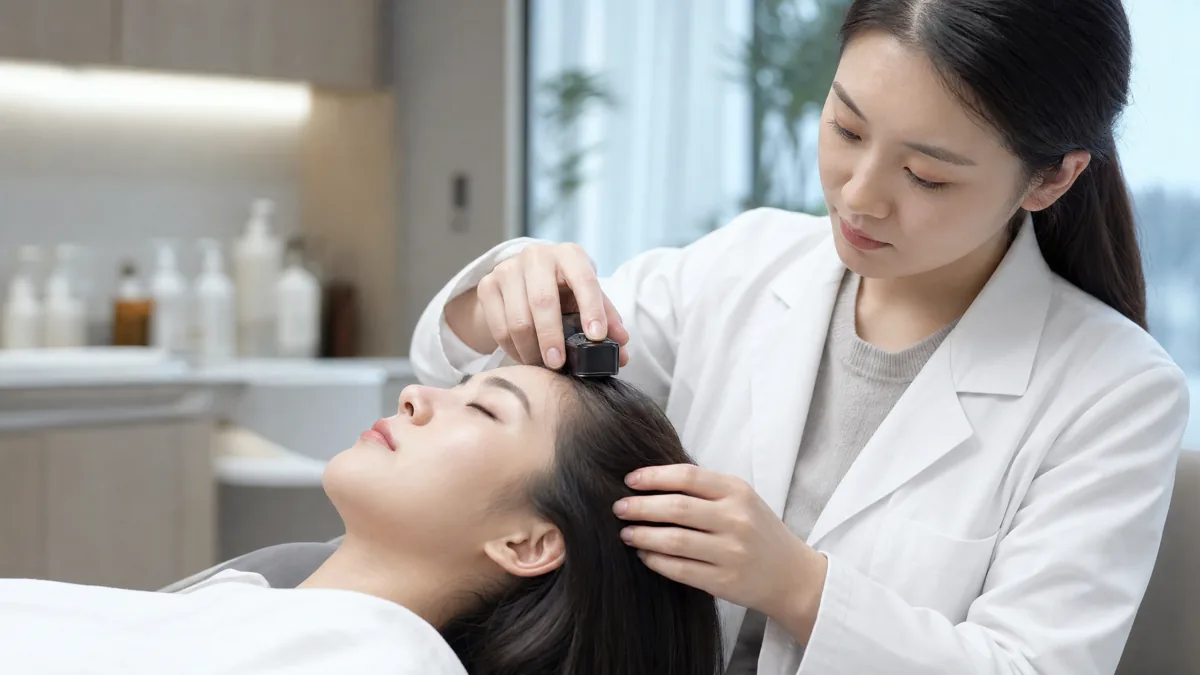
DT HUB offers professional scalp assessment and treatment services. The scalp diagnosis uses microscope technology to identify folliculitis causes and severity, followed by targeted treatment protocols. Regular maintenance treatments help prevent recurrence. English communication available throughout consultation and treatment.
Frequently asked questions
Is scalp folliculitis contagious?
Bacterial folliculitis can potentially spread through shared items (combs, towels, pillowcases). Avoid sharing personal hair items and wash bedding regularly. It is not typically spread through casual contact.
Can folliculitis cause permanent hair loss?
Superficial folliculitis rarely causes permanent hair loss. However, deep or chronic folliculitis can damage follicles permanently if untreated. Early treatment prevents scarring.
How long does folliculitis take to heal?
Mild cases: 1–2 weeks with proper care. Moderate cases: 2–4 weeks. Chronic or recurring cases may need ongoing management. Seek professional help if not improving within 2 weeks.
Does diet affect scalp folliculitis?
Indirectly. High-sugar and high-dairy diets may increase oil production and inflammation. A balanced diet supports immune function and skin health. However, diet alone rarely causes or cures folliculitis.
Can I still colour or perm my hair with folliculitis?
Wait until folliculitis has fully resolved. Chemical services can irritate inflamed follicles and worsen the condition. Your stylist should assess scalp health before proceeding with chemical services.
How often should I get professional scalp treatment?
For folliculitis prevention: every 2–4 weeks initially, then monthly once condition stabilises. For general scalp health maintenance: monthly.
Is scalp assessment available in English?
Yes. Full scalp diagnosis, treatment explanation, and aftercare guidance are available in English at DT HUB.