Scalp Diagnosis: What It Reveals and Why It Matters
What does professional scalp diagnosis reveal? Learn about microscope scalp analysis, what conditions it can identify, and how it guides effective treatment at DT HUB Hong Kong.
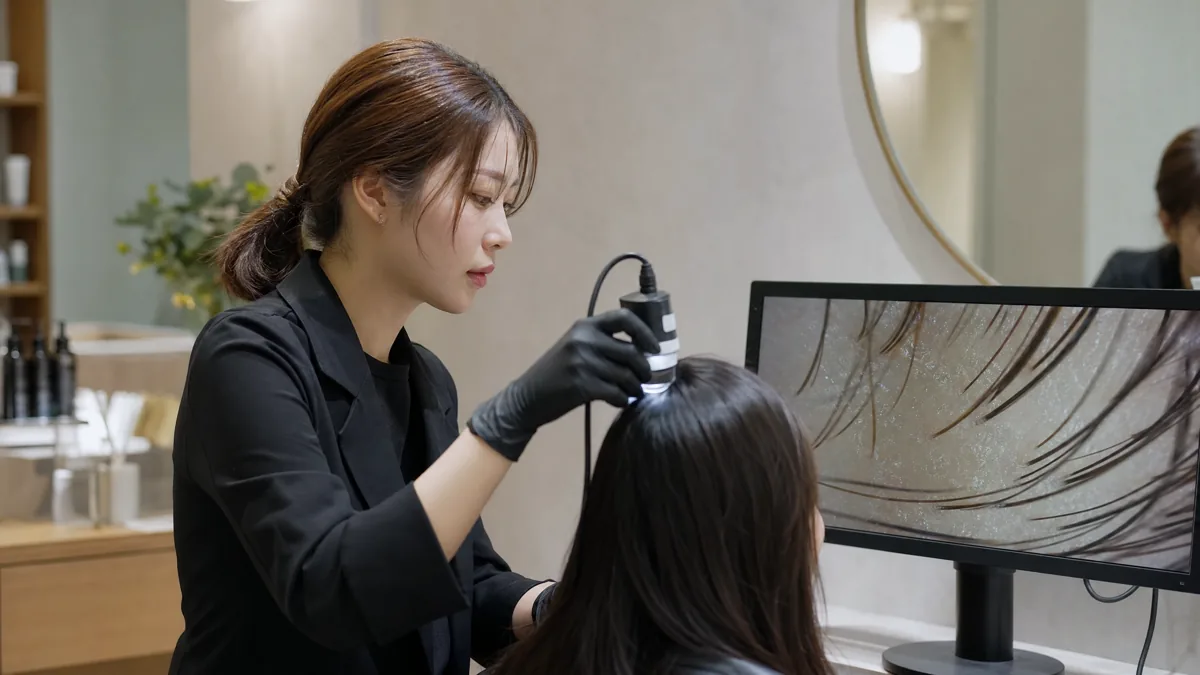
Professional scalp diagnosis uses a high-magnification microscope (50–200x) to examine scalp condition in detail — revealing follicle health, sebum levels, buildup, inflammation, and early signs of conditions like folliculitis or pattern thinning. This information guides precise treatment selection rather than guessing. At DT HUB, scalp diagnosis is included with scalp treatment services.
You cannot effectively treat what you cannot accurately diagnose. Professional scalp diagnosis provides objective, visual evidence of your scalp's condition — replacing guesswork with precision. This guide explains what the process involves, what it can reveal, and how it transforms scalp care from generic to targeted.
What Is Professional Scalp Diagnosis?
Professional scalp diagnosis uses a specialised microscope (typically 50–200x magnification) connected to a display screen. The specialist examines multiple areas of your scalp, capturing images that reveal details invisible to the naked eye: individual follicle condition, sebum accumulation, dead skin buildup, blood vessel health, and early signs of various scalp conditions.
What Can Scalp Diagnosis Reveal?
| Condition | What Microscope Shows | Significance |
|---|---|---|
| Healthy scalp | Clean follicles, balanced sebum, no inflammation | Baseline for comparison |
| Excess sebum | Oily coating around follicles, clogged pores | Can lead to hair thinning if untreated |
| Folliculitis | Red, inflamed follicles, possible pustules | Requires targeted anti-inflammatory treatment |
| Dehydration | Flaky, tight scalp surface, dry follicle openings | Needs moisture-focused treatment |
| Early thinning | Miniaturised follicles, fewer hairs per follicle | Early intervention can slow progression |
| Product buildup | Visible residue coating scalp and follicles | Requires detox before other treatments work |
| Sensitivity | Redness, visible capillaries, reactive skin | Needs gentle products and careful handling |
Why Diagnosis Before Treatment Matters
Without diagnosis, scalp treatment is essentially guessing — and the wrong treatment can worsen problems. For example: applying moisturising treatment to an oily, clogged scalp makes congestion worse; using strong clarifying products on a sensitive, dehydrated scalp causes further irritation. Diagnosis ensures the treatment matches the actual condition.
The Diagnosis Process at DT HUB
At DT HUB, scalp diagnosis follows a structured process: the specialist examines 6–8 areas of your scalp (front, crown, sides, back, and any areas of concern), captures images at each location, explains what each image shows (on the screen so you can see), identifies the primary condition(s), and recommends a targeted treatment plan.
The entire diagnosis takes approximately 15–20 minutes and is included with scalp treatment services. Images are saved to your client file for comparison at future visits — allowing you (and your specialist) to track improvement over time.
How Often Should You Get Scalp Diagnosis?
For those with active scalp concerns: at each treatment visit (every 2–4 weeks) to monitor progress. For maintenance: every 3–6 months to catch any developing issues early. For those with no current concerns: annually as a preventive check, similar to a dental check-up.
What Diagnosis Cannot Do
Scalp diagnosis is a visual assessment tool — not a medical diagnostic. It can identify visible conditions and guide salon-level treatment, but it cannot diagnose medical conditions, prescribe medication, or replace dermatological consultation. If the specialist identifies something that appears to require medical attention, they will recommend you see a dermatologist.
Frequently asked questions
Does scalp diagnosis hurt?
Not at all. The microscope simply rests gently on the scalp surface — there is no pressure, no needles, and no discomfort. The process is completely non-invasive.
How much does scalp diagnosis cost?
At DT HUB, scalp diagnosis is included with scalp treatment services (from $380). It is also available as a standalone consultation — ask for current pricing.
Can scalp diagnosis detect hair loss?
Yes. The microscope can identify early signs of thinning — miniaturised follicles, reduced hair density per follicle, and follicle health indicators. Early detection allows early intervention.
What should I do before scalp diagnosis?
Come with your normal hair routine — do not specially prepare. The specialist needs to see your scalp in its typical state to make accurate assessments. Avoid washing immediately before if possible.
Will I see the images?
Yes. The microscope is connected to a screen, and the specialist shows and explains each image to you in real-time. Images are saved for future comparison.
Is scalp diagnosis available in English?
Yes. The specialist explains all findings and recommendations in English. Visual images make the diagnosis easy to understand regardless of language.
How is this different from a dermatologist visit?
Scalp diagnosis at a salon focuses on cosmetic scalp health and guides salon-level treatments. A dermatologist provides medical diagnosis and can prescribe medication. Both have their place — salon diagnosis for ongoing scalp care, dermatologist for medical conditions.