Understanding Hair Loss — Types, Causes & Professional Treatment Options in Hong Kong
Comprehensive guide to hair loss: understand the types (androgenetic, telogen effluvium, alopecia areata), causes, and professional treatment options available at DT HUB Kwun Tong. English communication available.
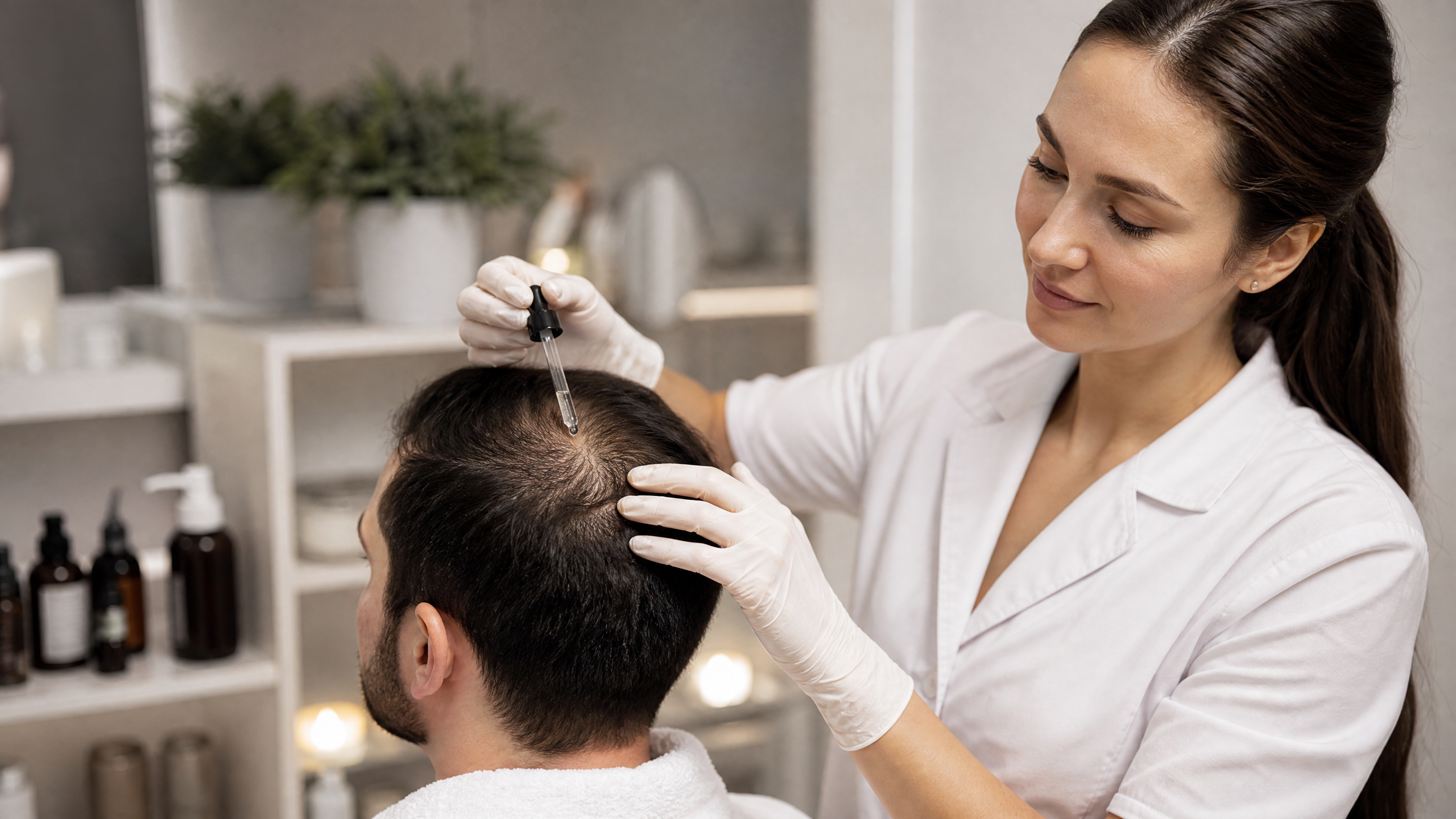
Hair loss has multiple types and causes. The most common are androgenetic alopecia (genetic pattern loss), telogen effluvium (stress/shock-induced shedding), and alopecia areata (autoimmune patchy loss). At DT HUB Kwun Tong, we provide scalp diagnosis to identify your type, followed by targeted scalp treatments to improve the growth environment. From $680/session. English communication available.
Hair loss affects approximately 50% of men and 25% of women by age 50, making it one of the most common concerns that brings clients to our salon. Yet despite its prevalence, hair loss remains poorly understood by most people. The internet is filled with conflicting information, miracle cure claims, and anxiety-inducing statistics that make it difficult to know what is actually happening and what can realistically be done about it.
At DT HUB in Kwun Tong, we believe in honest, evidence-based education about hair loss. We do not sell miracle cures or make unrealistic promises. Instead, we help you understand what type of hair loss you are experiencing, what is causing it, what professional scalp care can realistically achieve, and when medical referral is appropriate. This knowledge empowers you to make informed decisions about your hair health.
This comprehensive guide covers the major types of hair loss, their causes and progression patterns, the role of scalp health in hair retention, and the professional treatments available at our salon. Whether you are noticing the first signs of thinning or have been dealing with hair loss for years, understanding your condition is the essential first step. English communication is available for all consultations and treatments.
Types of Hair Loss
The main types are androgenetic alopecia (genetic), telogen effluvium (stress-induced), alopecia areata (autoimmune), and traction alopecia (mechanical damage).
Hair loss is not a single condition — it is an umbrella term covering several distinct types, each with different causes, patterns, and treatment responses. Androgenetic alopecia (AGA) is the most common type, affecting both men (male pattern baldness) and women (female pattern hair loss). It is driven by genetic sensitivity to dihydrotestosterone (DHT), which causes follicles to progressively miniaturise — producing thinner, shorter hairs with each growth cycle until they eventually stop producing visible hair altogether.
Telogen effluvium (TE) is the second most common type and is characterised by diffuse shedding across the entire scalp. It occurs when a large number of follicles simultaneously enter the resting (telogen) phase, typically triggered by a stressful event 2–3 months prior: illness, surgery, emotional trauma, crash dieting, childbirth, or medication changes. The good news is that TE is usually self-limiting — once the trigger is removed, hair regrows within 6–12 months.
Alopecia areata is an autoimmune condition where the immune system attacks hair follicles, causing sudden, patchy hair loss (smooth, round bald patches). It can affect the scalp, beard, or body hair. Traction alopecia results from repeated mechanical stress on follicles — tight ponytails, braids, extensions, or headwear that pull on the hair over time. Unlike genetic loss, traction alopecia is entirely preventable and often reversible if caught early.
| Type | Pattern | Cause | Reversibility |
|---|---|---|---|
| Androgenetic (AGA) | Receding hairline, crown thinning (M); diffuse thinning (F) | Genetic + hormonal (DHT) | Manageable, not fully reversible |
| Telogen Effluvium | Diffuse shedding, all areas | Stress, illness, hormonal shift | Usually self-resolving (6–12 months) |
| Alopecia Areata | Smooth round patches | Autoimmune | Variable — may regrow spontaneously |
| Traction Alopecia | Hairline, temples, where tension occurs | Mechanical pulling (tight styles) | Reversible if caught early |
| Scarring Alopecia | Irregular patches with scarring | Inflammation destroying follicles | Permanent where scarred |
The Role of Scalp Health in Hair Retention
A healthy scalp environment supports stronger, longer-lasting hair growth. Poor scalp health accelerates thinning regardless of genetic predisposition.
While genetics determine your predisposition to hair loss, scalp health determines how quickly that predisposition manifests and how well your remaining hair thrives. Think of it this way: genetics load the gun, but scalp health pulls the trigger. A person with genetic predisposition to thinning who maintains excellent scalp health will retain hair longer than someone with the same genetics but a neglected, congested scalp.
The mechanisms are straightforward. Clogged follicles restrict the space available for hair growth and limit nutrient delivery. Poor circulation means less oxygen and fewer growth factors reach the hair root. Chronic inflammation (from untreated scalp conditions) creates a hostile environment that shortens the growth phase of the hair cycle. Excess sebum oxidises and produces free radicals that damage follicle cells.
This is where professional scalp care makes a meaningful difference. By maintaining a clean, well-circulated, balanced scalp environment, we support the conditions under which hair grows best. For clients with early-stage genetic thinning, this can significantly slow progression. For those with stress-related or scalp-health-related thinning, it can facilitate genuine regrowth. Our treatments do not override genetics, but they optimise the environment within which your follicles operate.
What DT HUB Can Offer
Scalp diagnosis, professional scalp treatments (detox, growth stimulation, LED therapy), and honest guidance on when medical referral is appropriate.
At DT HUB, our hair loss services focus on what we can genuinely deliver: accurate diagnosis, professional scalp optimisation, and honest guidance. We begin with a comprehensive micro-camera scalp diagnosis to identify your hair loss type, assess follicle health, and determine whether your condition is likely to respond to scalp therapy or requires medical intervention.
For conditions that respond to scalp care (early-stage thinning, telogen effluvium, scalp-health-related loss), we offer structured treatment programmes combining deep cleansing, growth-stimulating serums, scalp massage, and LED light therapy. These treatments improve the scalp environment and support healthier, stronger hair growth. Most clients see reduced shedding within 4 weeks and visible improvement within 8–12 weeks of consistent treatment.
For conditions that require medical intervention (advanced androgenetic alopecia, alopecia areata, scarring alopecia), we are transparent about the limitations of salon-based treatments and provide referrals to dermatologists or trichologists. We can continue to provide supportive scalp care alongside medical treatment — the two approaches complement each other well. We never make promises we cannot keep, and we never discourage clients from seeking medical advice when it is warranted.
Frequently asked questions
How do I know if my hair loss is normal or excessive?
Losing 50–100 hairs per day is normal. If you consistently notice more hair in your brush, shower drain, or on your pillow, or if you can see scalp through your hair where you previously could not, it may be excessive. A scalp diagnosis can objectively assess your situation.
Can stress really cause hair loss?
Yes. Telogen effluvium — diffuse shedding triggered by stress — is very common. It typically appears 2–3 months after a stressful event and is usually self-resolving once the stress is managed. Our treatments can accelerate recovery.
Is hair loss hereditary?
Androgenetic alopecia (pattern hair loss) has a strong genetic component. However, genetics is not destiny — scalp health, nutrition, stress management, and early intervention all influence how and when genetic predisposition manifests.
At what age does hair loss typically start?
Androgenetic alopecia can begin as early as the late teens/early twenties in men, and typically after menopause in women. However, stress-related and scalp-health-related thinning can occur at any age.
Should I see a doctor or come to DT HUB first?
For general thinning or scalp concerns, starting with our scalp diagnosis is appropriate — we can assess your condition and refer to a doctor if needed. For sudden, severe, or patchy hair loss, we recommend seeing a dermatologist first.
Do your treatments work for everyone?
No treatment works for everyone. Our scalp therapies are most effective for early-stage thinning, stress-related loss, and scalp-health-related conditions. We are always honest about realistic expectations for your specific situation.
How long before I see results?
Most clients notice reduced shedding within 2–4 weeks. Visible density improvement typically takes 8–12 weeks of consistent treatment. We track progress with micro-camera comparisons at regular intervals.