Postpartum Hair Loss — Why It Happens & How to Support Recovery
Understand postpartum hair loss: why it happens after pregnancy, when it resolves, and how professional scalp treatments at DT HUB Kwun Tong can support faster recovery. English communication available.
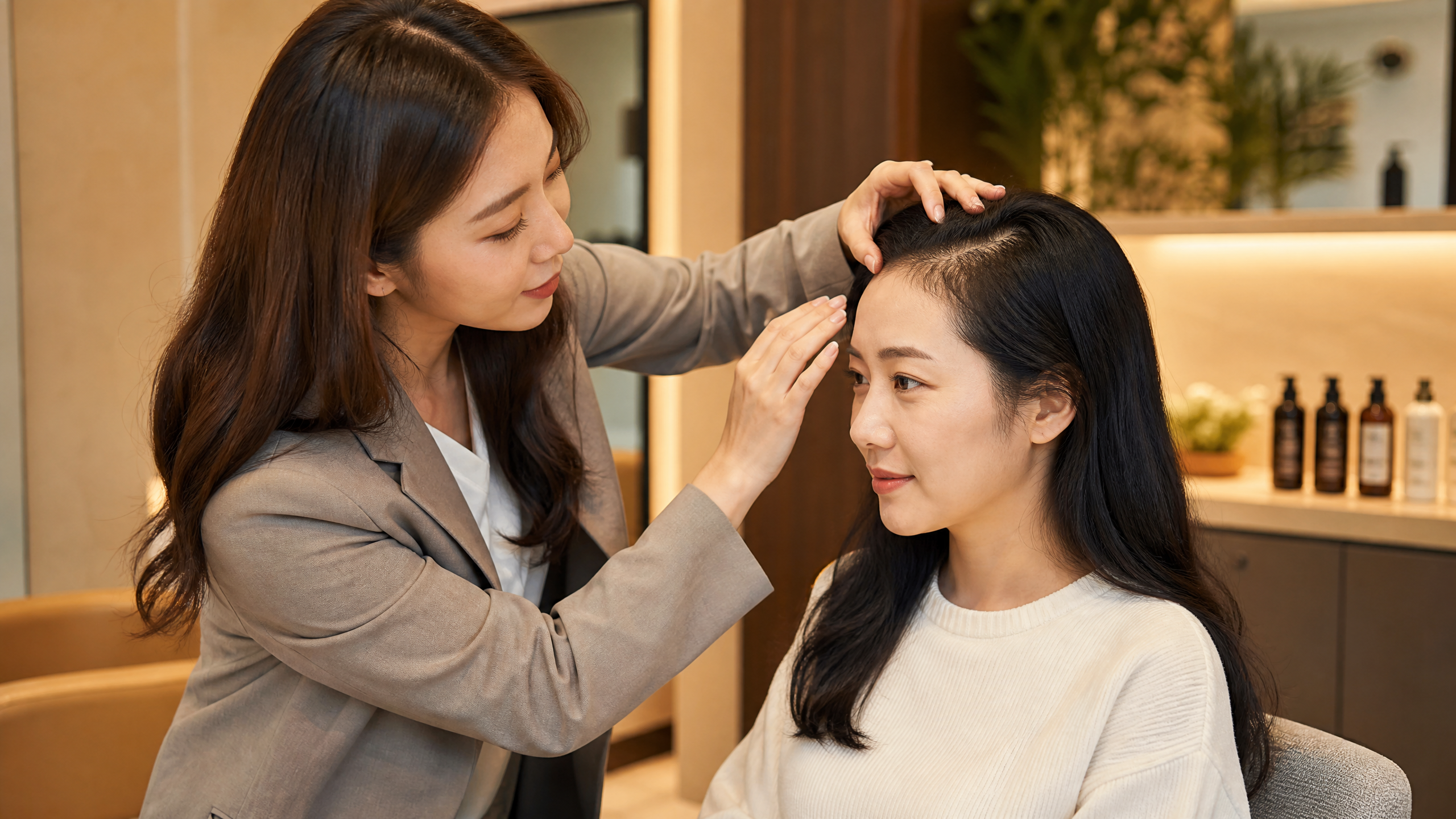
Postpartum hair loss affects up to 50% of new mothers, typically beginning 2–4 months after delivery. It is caused by the sudden drop in oestrogen that triggers follicles to enter the resting phase simultaneously. The condition is temporary and self-resolving (6–12 months), but professional scalp treatments at DT HUB can support faster recovery by optimising the scalp environment for regrowth. From $580. English communication available.
Few things are more alarming for a new mother than watching clumps of hair come out in the shower, on the pillow, or in the hairbrush. Postpartum hair loss — medically known as postpartum telogen effluvium — is a common and entirely normal physiological process that affects up to 50% of women after childbirth. Despite its prevalence, it remains poorly explained by healthcare providers, leaving many new mothers anxious and searching for answers.
At DT HUB in Kwun Tong, we see many new mothers seeking help for postpartum shedding. Our role is twofold: first, to reassure you that this is temporary and normal; second, to provide professional scalp care that supports the healthiest possible environment for regrowth. We do not sell miracle cures for a condition that resolves naturally — but we can accelerate recovery and help you feel more confident during the shedding phase.
This guide explains the science behind postpartum hair loss, what to expect in terms of timeline, what you can do at home, and how professional scalp treatments can support your recovery. English communication is available for all consultations — we understand that many expatriate mothers in Hong Kong appreciate being able to discuss this sensitive topic in their first language.
Why Does Postpartum Hair Loss Happen?
During pregnancy, high oestrogen keeps hair in the growth phase. After delivery, oestrogen drops suddenly, causing many follicles to enter the resting phase and shed simultaneously 2–4 months later.
To understand postpartum hair loss, you need to understand the normal hair growth cycle. Each hair follicle cycles through three phases: anagen (active growth, lasting 2–7 years), catagen (transition, 2–3 weeks), and telogen (resting, 2–3 months, after which the hair sheds). Normally, about 85–90% of your hair is in anagen and 10–15% is in telogen at any given time, resulting in a steady daily shed of 50–100 hairs.
During pregnancy, elevated oestrogen levels extend the anagen phase, meaning fewer hairs enter telogen and shed. This is why many women notice their hair becoming thicker and more luxurious during pregnancy — you are retaining hairs that would normally have shed. After delivery, oestrogen levels drop rapidly back to pre-pregnancy levels. This hormonal shift triggers a large number of follicles to simultaneously enter telogen. Two to four months later (the length of the telogen phase), these hairs all shed at once.
The result is dramatic but temporary: instead of losing 50–100 hairs per day, you may lose 200–400. It can feel alarming, but you are not going bald — you are simply shedding the 'extra' hair that was retained during pregnancy, plus your normal daily shed. The follicles are not damaged; they will re-enter anagen and produce new hair. Most women notice regrowth beginning by 6 months postpartum, with full recovery by 12 months.
Timeline and What to Expect
Shedding typically peaks at 3–4 months postpartum and resolves by 6–12 months. Breastfeeding may slightly delay recovery.
The typical timeline for postpartum hair loss follows a predictable pattern. Shedding usually begins 2–4 months after delivery (corresponding to the telogen phase length). It peaks around 3–4 months postpartum, when the volume of daily hair loss is most noticeable. Gradually, shedding decreases from months 5–8, and most women notice new growth (short, baby hairs at the hairline and crown) by month 6.
Full recovery — meaning your hair returns to its pre-pregnancy density — typically takes 9–12 months. However, some women notice that their hair texture or thickness changes permanently after pregnancy. This is normal and related to hormonal shifts rather than damage. Breastfeeding can slightly extend the timeline, as prolactin (the breastfeeding hormone) can delay the full normalisation of the hair growth cycle.
It is important to note that if shedding continues beyond 12 months postpartum, or if you notice patchy loss rather than diffuse thinning, other factors may be involved — thyroid dysfunction, iron deficiency, or nutritional depletion are common postpartum conditions that can independently cause hair loss. In these cases, we recommend blood tests through your GP to rule out underlying causes.
| Timeline | What Happens | What You'll Notice |
|---|---|---|
| Pregnancy | High oestrogen retains hair in growth phase | Thicker, fuller hair |
| 0–2 months postpartum | Oestrogen drops, follicles enter telogen | Normal shedding resumes |
| 2–4 months postpartum | Mass telogen release begins | Increased shedding, hair in shower/brush |
| 3–4 months postpartum | Peak shedding period | Most noticeable hair loss |
| 5–8 months postpartum | Shedding decreases, regrowth begins | Baby hairs appearing at hairline |
| 9–12 months postpartum | Full recovery for most women | Hair density returning to normal |
How Professional Scalp Care Supports Recovery
Scalp treatments improve circulation, clear follicles, and deliver nutrients — creating optimal conditions for new hair to grow strong and healthy.
While postpartum hair loss resolves naturally, professional scalp care can support faster, healthier regrowth. The principle is simple: new hair grows best from a healthy, well-nourished scalp. By optimising the scalp environment during the recovery phase, we help ensure that regrowth is strong, thick, and healthy rather than fine and fragile.
Our postpartum scalp programme typically includes: gentle scalp detox to clear any buildup that may be restricting follicles; growth-stimulating massage to improve blood circulation and nutrient delivery to follicle roots; nourishing serums containing biotin, caffeine, and peptides that support the anagen (growth) phase; and LED light therapy to stimulate cellular metabolism in follicle cells.
We design the programme with new mothers' schedules in mind. Sessions are 45–60 minutes, and we can accommodate babies in prams in our salon. We recommend starting treatment when shedding peaks (around 3–4 months postpartum) and continuing for 4–6 sessions over 2–3 months. Many mothers find the sessions deeply relaxing — a rare moment of self-care during the demanding newborn period.
Home Care Tips for New Mothers
Gentle handling, nutrition focus (iron, protein, biotin), stress management, and avoiding tight hairstyles all support recovery.
Beyond professional treatment, several home-care strategies support postpartum hair recovery. Nutrition is paramount: ensure adequate protein intake (hair is made of keratin, a protein), iron levels (request a blood test if you suspect deficiency — common postpartum), biotin, zinc, and omega-3 fatty acids. If breastfeeding, continue your prenatal vitamin or switch to a postnatal formula that includes these nutrients.
Handle your hair gently during the shedding phase. Use a wide-tooth comb rather than a brush, avoid tight ponytails or buns that create traction on fragile follicles, and minimise heat styling. When washing, use a gentle, volumising shampoo and condition only the ends (not the scalp). Avoid heavy products that weigh down thinning hair.
Stress management is also important — cortisol (the stress hormone) can independently trigger telogen effluvium, potentially prolonging the postpartum shedding phase. While managing stress with a newborn is easier said than done, even small practices (a 10-minute walk, deep breathing, accepting help from others) can make a difference. Remember: this is temporary. Your hair will recover.
Frequently asked questions
Is postpartum hair loss normal?
Yes, completely normal. It affects up to 50% of women after childbirth and is a natural response to the hormonal shift from pregnancy to postpartum. It is temporary and self-resolving.
When will my hair grow back?
Most women notice regrowth beginning around 6 months postpartum, with full recovery by 9–12 months. The timeline varies slightly between individuals and may be slightly longer if breastfeeding.
Can I prevent postpartum hair loss?
You cannot prevent the hormonal trigger, but you can support your body's recovery through good nutrition, gentle hair handling, and professional scalp care that optimises the environment for regrowth.
Should I cut my hair short?
This is a personal choice. Some women find shorter styles make thinning less noticeable and are easier to manage with a newborn. Others prefer to keep length. We can advise on styles that maximise the appearance of volume.
Can I colour my hair during postpartum shedding?
Yes, gentle colouring is generally safe. We recommend ammonia-free formulations and avoiding full-head bleaching during peak shedding. Highlights or balayage are good options as they do not contact the scalp.
Is it safe to get scalp treatments while breastfeeding?
Yes. Our scalp treatments use topical products that are not absorbed systemically. They are safe during breastfeeding. We avoid any ingredients with contraindications for nursing mothers.
Can I bring my baby to the appointment?
Yes! We welcome babies in prams. Our salon is on the 21st floor with lift access, and we can accommodate your pram beside the treatment chair. Many mothers find the session a welcome moment of relaxation.