Scalp Diagnosis & Analysis in Hong Kong — Micro-Camera Scalp Check
Professional scalp diagnosis at DT HUB Kwun Tong uses 200x micro-camera technology to assess follicle health, sebum levels, and scalp condition. Personalised treatment recommendations. From $280. English communication available.
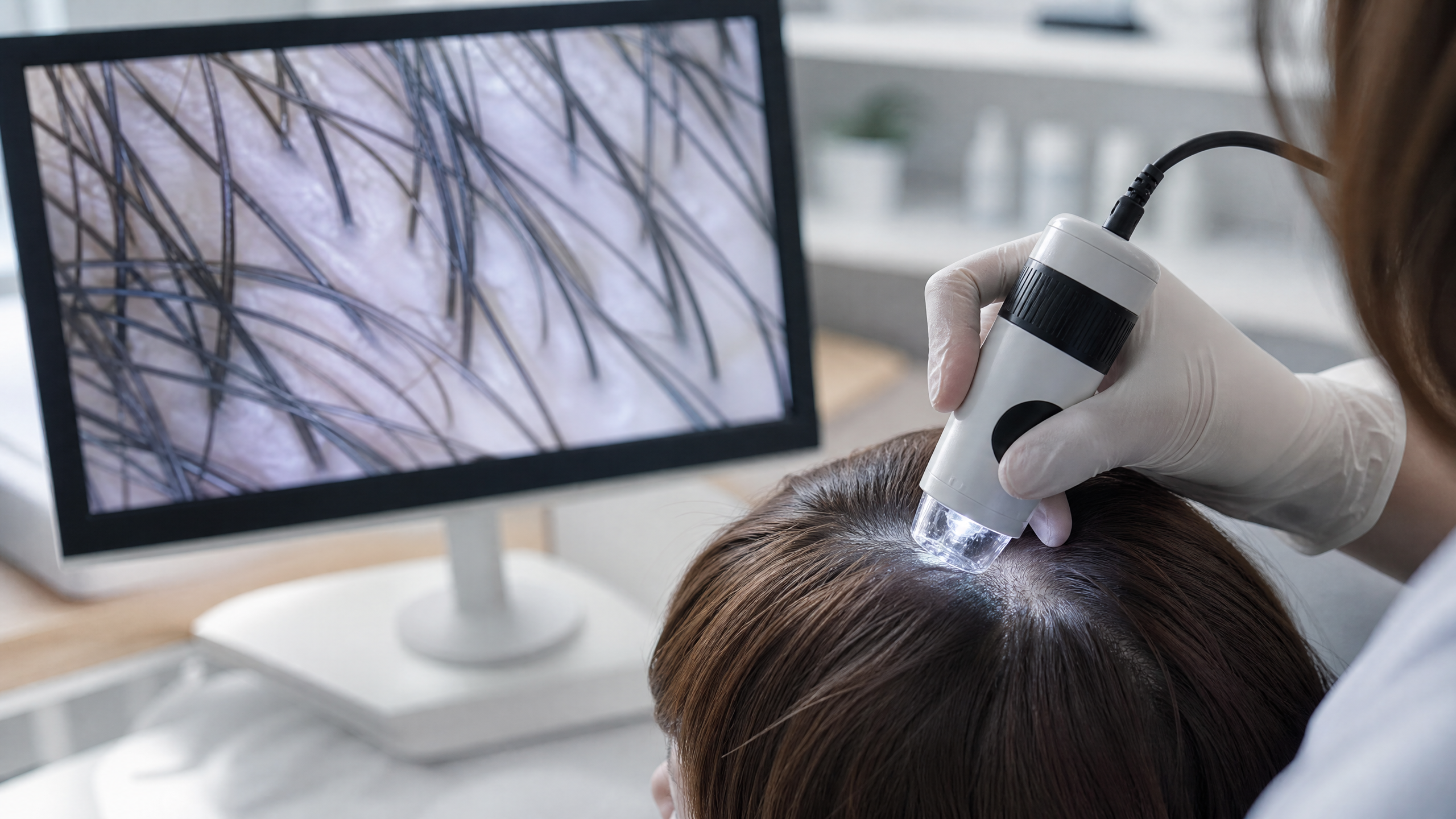
Scalp diagnosis at DT HUB Kwun Tong (from HK$280) uses 200x micro-camera technology to examine follicle density, sebum levels, pore congestion, scalp redness, and hair miniaturisation. The 20-minute assessment provides a clear picture of your scalp health and guides personalised treatment recommendations. English communication available. WhatsApp 5562 9872.
You cannot fix what you cannot see. This simple principle drives our approach to scalp health at DT HUB. Before recommending any scalp treatment, we believe in objective diagnosis — using technology to see beneath the surface and understand exactly what is happening at the follicular level. Our micro-camera scalp diagnosis provides a magnified, real-time view of your scalp that reveals conditions invisible to the naked eye.
Many people live with scalp issues — excessive oiliness, persistent flaking, gradual thinning, or unexplained itching — without understanding the underlying cause. They try different shampoos, follow online advice, or simply accept the condition as normal. A professional scalp diagnosis cuts through the guesswork by providing visual evidence of what is actually happening: Are your follicles congested with sebum? Is there inflammation around the hair roots? Are your hairs miniaturising (becoming thinner with each growth cycle)? Are there signs of folliculitis or fungal activity?
At DT HUB in Kwun Tong, scalp diagnosis is available as a standalone service or as the first step in any scalp treatment programme. The assessment takes approximately 20 minutes and includes a detailed explanation of findings, comparison with healthy scalp benchmarks, and personalised recommendations for treatment and home care. English communication is available throughout — we explain every image clearly so you understand your scalp's condition.
What Does Scalp Diagnosis Reveal?
Follicle density, sebum levels, pore congestion, inflammation, hair miniaturisation, scalp hydration, and signs of infection or disease.
Our 200x micro-camera captures high-resolution images of your scalp from multiple zones (frontal, crown, temporal, and occipital). Each image reveals information that is impossible to assess with the naked eye. We evaluate seven key parameters: follicle density (how many hairs emerge per follicular unit), sebum production (the amount and consistency of oil around each follicle), pore congestion (whether follicles are blocked by hardened sebum or dead skin), and scalp colour (redness indicates inflammation, yellowish tones suggest excess oil).
We also assess hair miniaturisation — a critical early indicator of pattern hair loss. Miniaturisation occurs when hairs become progressively thinner with each growth cycle, eventually producing only fine, barely visible vellus hairs. Catching this early allows for intervention before significant visible thinning occurs. Additionally, we check for signs of folliculitis (infected follicles), fungal activity (often appearing as irregular flaking patterns), and the overall hydration level of the scalp skin.
All findings are documented with timestamped images, creating a baseline record that allows us to track changes over time. If you return for follow-up assessments after treatment, we compare current images with your baseline to objectively measure improvement — no guesswork, just visual evidence.
| Parameter | Healthy Benchmark | Concern Indicators |
|---|---|---|
| Follicle density | 2–4 hairs per unit | < 2 hairs per unit, empty follicles |
| Sebum level | Light, clear coating | Thick, yellow plugs blocking pores |
| Scalp colour | Uniform pale pink/white | Redness, yellow patches, dark spots |
| Hair thickness | Uniform diameter | Mixed thick and thin (miniaturisation) |
| Pore clarity | Open, clear follicles | Blocked, congested, or inflamed |
| Hydration | Smooth, supple surface | Dry, flaky, or cracked skin |
The Diagnosis Process
20-minute assessment: zone-by-zone micro-camera examination, real-time explanation, comparison with benchmarks, and personalised recommendations.
The diagnosis appointment is straightforward and non-invasive. You sit comfortably while your therapist parts your hair in systematic sections, placing the micro-camera probe against your scalp in each zone. The magnified image appears on a screen in real time, and your therapist explains what you are seeing — pointing out healthy areas, areas of concern, and any patterns that suggest specific conditions.
We examine at least four zones: the frontal hairline (often the first area to show thinning), the crown (where pattern loss typically begins in men), the temporal areas (sides), and the occipital region (back of head, which serves as a healthy reference point as it is rarely affected by pattern loss). For clients with specific concerns, we examine additional areas as needed.
After the examination, your therapist summarises the findings and provides recommendations. These may include: specific scalp treatments (detox, head spa, anti-hair-loss therapy), product recommendations for home care, lifestyle modifications, or — if we identify signs of a medical condition — referral to a dermatologist. We never diagnose medical conditions ourselves, but we can identify signs that warrant professional medical evaluation.
When Should You Get a Scalp Diagnosis?
When experiencing hair loss, persistent scalp issues, before starting a treatment programme, or as a baseline health check.
We recommend scalp diagnosis in several situations. First, if you are experiencing increased hair shedding or visible thinning — early diagnosis can identify whether this is temporary (stress-related, seasonal) or progressive (pattern loss), guiding appropriate intervention. Second, if you have persistent scalp symptoms (itching, flaking, oiliness, tenderness) that have not responded to over-the-counter products — diagnosis reveals the underlying cause.
Third, before starting any scalp treatment programme — diagnosis ensures you receive the right treatment for your specific condition rather than a generic approach. Fourth, as a baseline health check — even if you have no current concerns, a baseline assessment provides a reference point for future comparison. Many clients include a scalp check as part of their regular head spa appointment.
We particularly encourage diagnosis for clients who have noticed gradual changes over months or years. Hair loss is often so gradual that you do not notice it until significant thinning has occurred. A micro-camera assessment can detect miniaturisation and density changes at a much earlier stage than visual observation, allowing for earlier intervention when treatments are most effective.
Frequently asked questions
How long does a scalp diagnosis take?
Approximately 20 minutes for a comprehensive assessment of all scalp zones, explanation of findings, and recommendations.
Is it painful or invasive?
Not at all. The micro-camera probe simply rests against your scalp surface — there is no penetration, no pulling, and no discomfort whatsoever.
Do I need to wash my hair before the appointment?
Ideally, come with hair that has not been washed for 24 hours. This allows us to assess your natural sebum production accurately. Freshly washed hair may mask oiliness issues.
Can you diagnose medical conditions?
We identify visual signs that may indicate conditions, but we do not provide medical diagnoses. If we observe signs of a medical condition (severe inflammation, unusual patterns), we will recommend you consult a dermatologist.
Will you show me the images?
Yes. The entire assessment is conducted with the screen visible to you. We explain every image in real time and save key images for your records and future comparison.
How often should I get a follow-up assessment?
If you are undergoing treatment, we recommend reassessment every 4–8 weeks to track progress. For general monitoring, every 3–6 months is sufficient.
Is the diagnosis fee refunded if I book a treatment?
The standalone diagnosis fee ($280) is separate. However, diagnosis is included free with any scalp treatment course booking (4+ sessions).