Before a Post-Treatment Photo with Family and Friends: Deciding on Your Wig Hairline, Parting and Whether to Be Photographed
A photo with family and friends is not a test of your wig's performance; base your decision on how the hair usually falls, scalp comfort, positioning and the option to stay out of the photo.
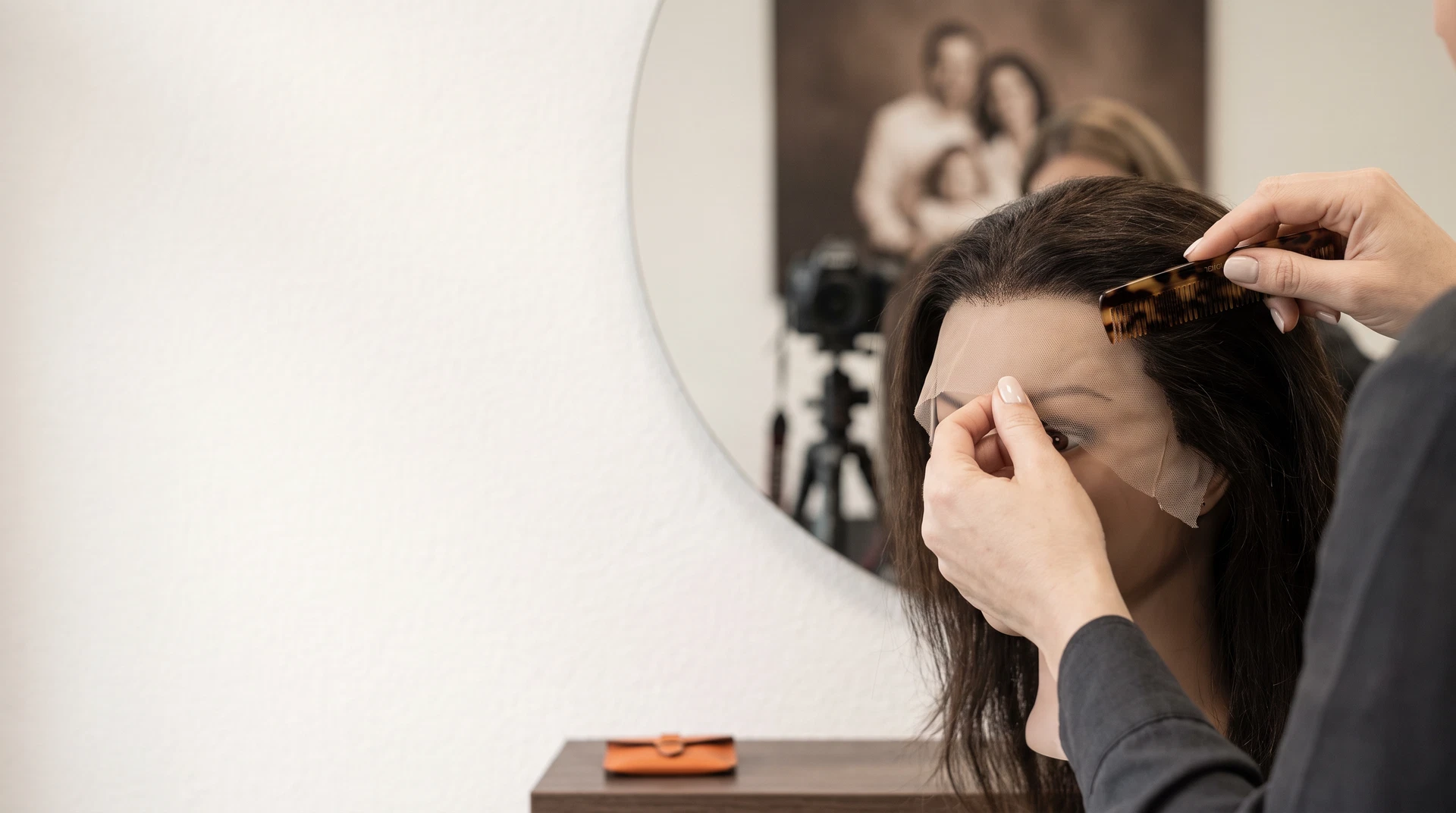
Photos with family and friends can be a gentle way to record a moment, but they can also bring pressure about being on camera. The camera should not turn getting your wig ready into a test: you can choose where to stand, the lighting, whether to be in the photo and whether to share it. On-the-spot attempts to look good on camera that add stress, involve cutting lace or use attachment products at the last minute are not appropriate if you have a sensitive scalp or are in the post-treatment period.
Stick to familiar steps before the group photo
- Check your scalp first: If there is discomfort, adjusting your appearance is not the priority.
- Then check how the hair falls: Stick to familiar steps for tidying your parting and dealing with small knots, without making major changes.
- Finally, consider the camera: Adjust your position or the lighting, and keep the option of staying out of the photo or taking it later.
For general everyday guidance on the hairline and parting, see dim light wig hairline; this does not guarantee a natural appearance or replace scalp care after treatment.
Photos do not have to define your recovery progress
Whether or not you are in the photo does not reflect how ready you are for treatment or socialising with family. If your scalp is tender, red or itchy, or you feel a pulling sensation, first stop using the relevant products or wearing the wig, and follow your medical team's instructions.
Medical safety boundaries for socialising with family after treatment
This article is for general education on everyday decision-making only and does not diagnose or prescribe, and does not guarantee a natural appearance, secure attachment, durability, longevity, comfort or suitability for any family social plans. Decisions about when it is appropriate to go out, whether to wear a wig for long periods, and whether to use liners, hats or attachment products must prioritise your treating medical team's instructions, product labels, the actual fit and scalp comfort. If treatment involves the head, you already have specific care requirements, or there is broken skin, oozing, a rash, persistent itching, severe tenderness, fever or concern about infection, first stop using the relevant products and stop wearing the wig, and follow your medical team's instructions.
Care references: Macmillan wig information notes that treatment can make the scalp sensitive, and that wig caps, liners and attachment products should be handled according to instructions from healthcare professionals or the supplier; American Cancer Society wig information recommends choosing and caring for wigs according to size, cap construction, materials and the supplier's instructions; Breastcancer.org everyday wig information reminds wearers to pay attention to size, positioning around the ears, liners and hair grooming during everyday wear.
Frequently asked questions
Can I cut the lace or change the hairline on the spot before a group photo?
This is not recommended. Last-minute changes may increase pulling or discomfort; only make familiar, low-risk grooming adjustments in line with the product label.
Does not wanting to be in the photo mean I do not care enough about my family?
No. Whether to be in the photo is a personal choice and does not reflect how much importance you place on your family, treatment or recovery.